

Key Aspects of a Pure-Play Foundry Model:
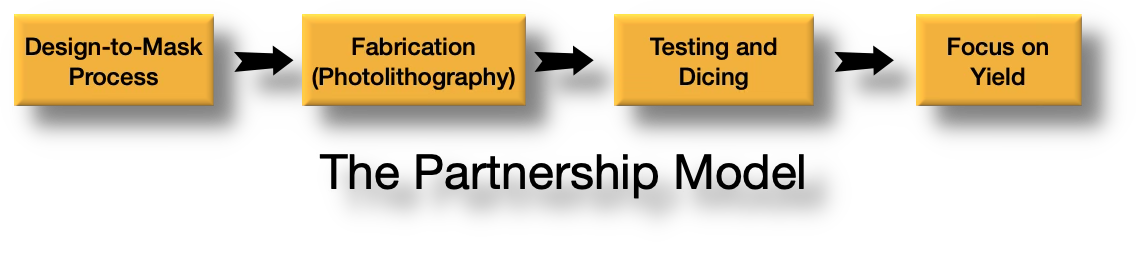
- The Partnership Model: The foundry acts as a specialized manufacturing arm, providing the high-cost infrastructure (fabs) that clients (fabless companies) do not own.
- Design-to-Mask Process: Clients submit finalized designs (GDSII files) using Process Design Kits (PDKs) provided by the foundry.
- Fabrication (Photolithography): The foundry converts designs onto silicon wafers through complex, multi-month steps including deposition, etching, and ion implantation.
- Testing and Dicing: After wafer fabrication, the foundry tests the chips and dices the wafer into individual chips (dies).
- Focus on Yield: Foundries focus heavily on maximizing the number of working chips per wafer (yield) to reduce costs for their clients.
Pure-play foundries thrive by providing specialized technology nodes (e.g., 3nm, 5nm) to numerous customers, reaping economies of scale that individual design firms cannot achieve on their own.